Harbor Lighting Replacement Planning
Replacing obsolete high-pressure discharge luminaires across an operating marine terminal requires precise logistics. We structure phased replacement roadmaps that preserve uninterrupted vessel docking and yard cargo movement.
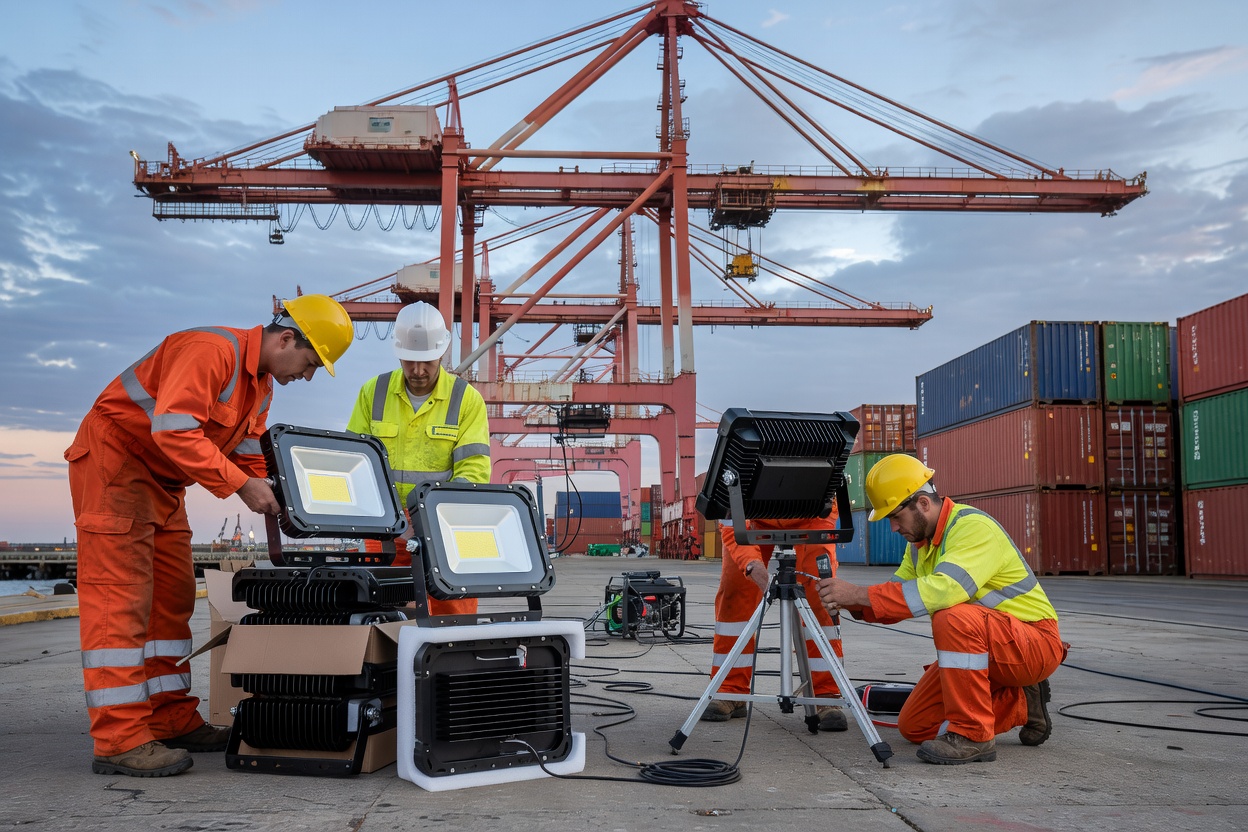
Phased Migration vs. Terminal Shutdown
Shutting down an active container berth or commercial ferry slip to swap obsolete fixtures causes severe operational disruption. Replacement projects must align with scheduled berth windows, tides, and vessel arrival plans.
Legacy metal-halide and sodium luminaires produce high heat, require heavy ballast gear, and demand frequent bulb changes that tie up expensive mobile crane equipment. Replacing them with modern marine solid-state luminaires cuts energy demand and maintenance cycles.
Condition Assessment and Priority Scoring
Capital budgets cannot replace every fixture simultaneously. We establish asset condition scoring based on three primary factors: mechanical housing corrosion severity, remaining insulation lifespan of supply cables, and measured photometric degradation.
Fixtures positioned on outermost breakwaters or in continuous seawater spray zones are scored for priority replacement ahead of sheltered inland storage sheds. This ensures capital allocation directly targets high-failure-risk locations.
Structural Compatibility and Wind Drag Verification
Replacing obsolete round floodlights with modern rectangular LED panels changes the aerodynamic drag profile of the high mast.
Our planning calculates the total projected surface area (EPA — Effective Projected Area) and verifies whether existing mast anchor bolts, foundation footings, and crossarm brackets can withstand regional storm gust pressures with the new hardware in place. If necessary, custom low-drag marine brackets are engineered before hardware arrival.
Electrical Compatibility and Inrush Load Analysis
While modern LED marine fixtures draw substantially less continuous running power than legacy 1000W metal-halide lamps, LED power supplies generate high initial inrush currents during switch-on.
Without proper electrical engineering, simultaneous switching of fifty retrofit fixtures can trip substation circuit breakers or damage generator transfer switches. We specify staggered startup relays, NTC inrush current limiters, and re-tuned distribution breakers to maintain operational stability.
Phased Staging and Berth Window Coordination
We divide harbor facilities into independent operational zones. Replacement proceeds berth by berth during low-traffic windows or between vessel arrival shifts.
Temporary perimeter illumination towers are positioned prior to de-energizing permanent masts, ensuring stevedore and security operations continue without interruption. Decommissioned mercury and metal-halide lamps are safely manifested for hazardous waste disposal in strict accordance with environmental recycling mandates.
Replacement Roadmap Checkpoints
- Calculate EPA wind drag and moment forces for all new fixture assemblies.
- Conduct baseline insulation resistance checks on feeder lines inside masts.
- Evaluate substation transformer capacity and phase balancing for new loads.
- Verify compatibility of new fixtures with marine vessel navigation cutoff rules.
- Plan hazardous lamp disposal manifests for mercury-containing legacy discharge units.
Develop Your Harbor Replacement Strategy
Coordinate multi-year retrofit roadmaps, wind-load assessments, and phased terminal migration schedules.